
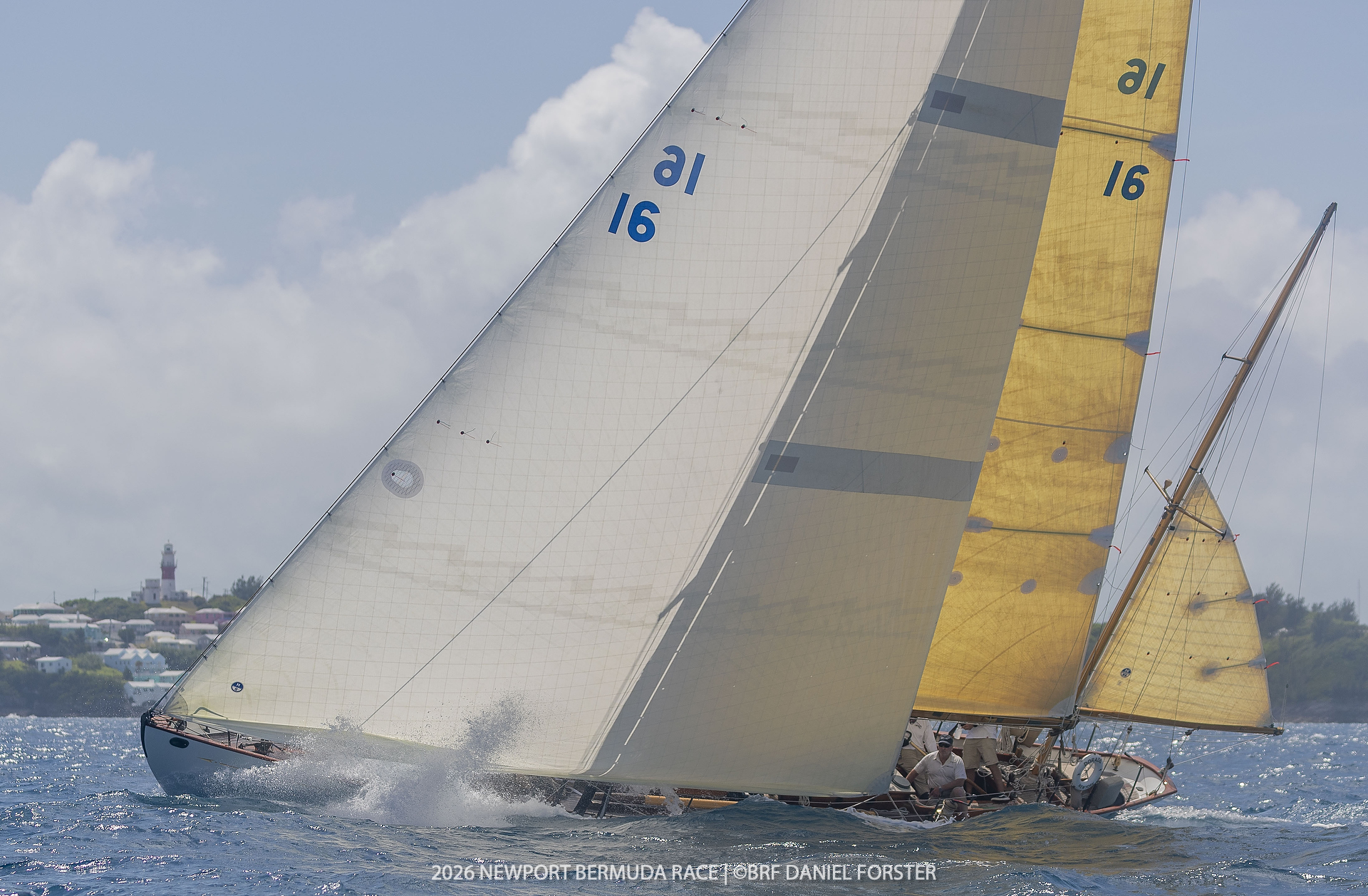
2026 Newport Bermuda Race
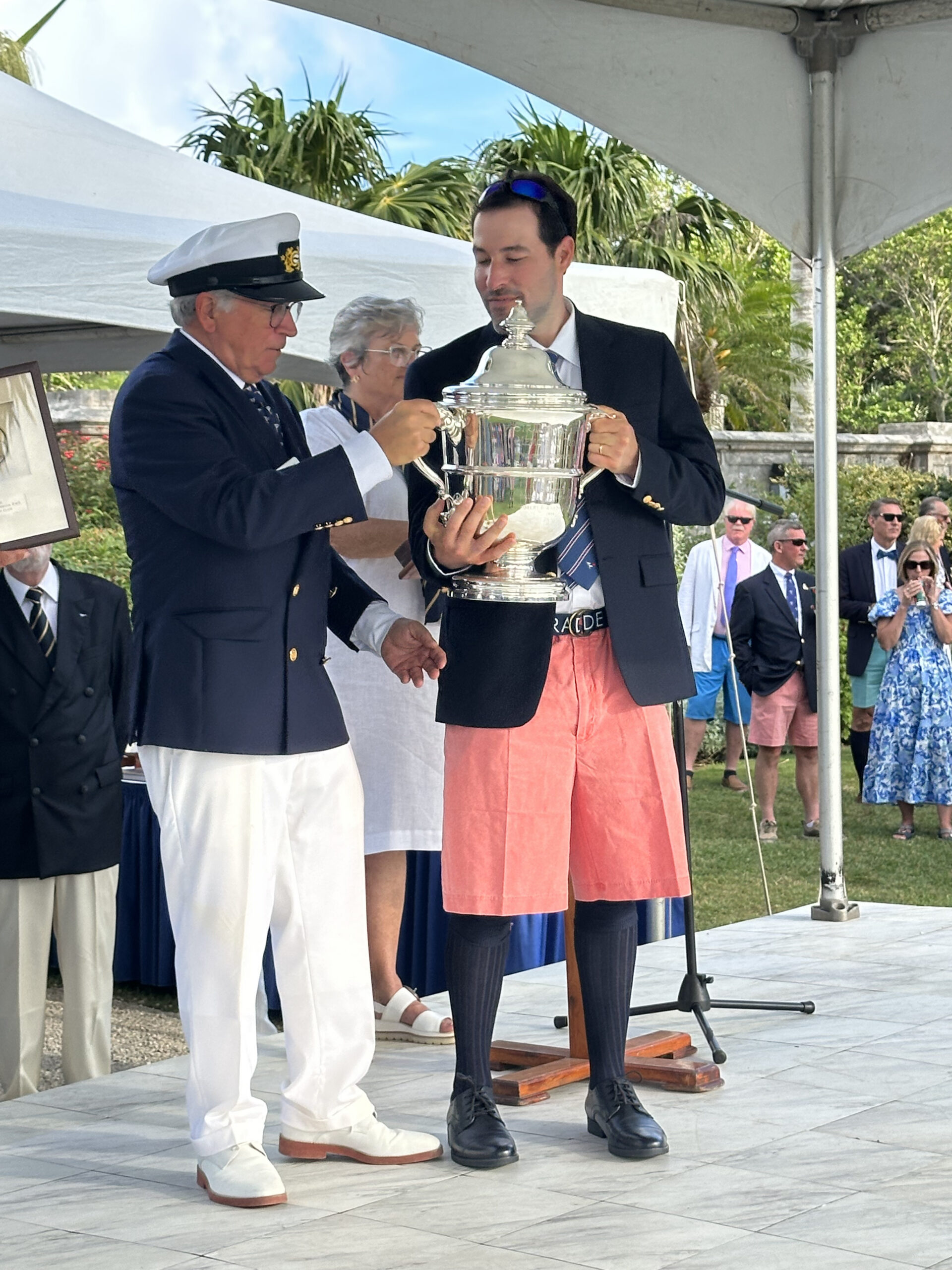
Dorade won its class in the 2026 Newport Bermuda Race after a tough race that started with plenty of wind and ended up light to moderate. Sailing master Kevin Miller provides the detailed race recap that follows. Dorade has sailed in seven Bermuda Races, three times in the 1930s and four times since 2012 under Matt Brooks’ ownership. Matt was unable to sail this year, but his son Bill joined the crew for his first offshore race, and his reflections offer a second view of the stories Race to the Onion Patch.
We started off Newport’s Fort Adams in 18-20 TWS (true wind speed) with a nice beat out of the East Passage in a strong ebb tide. Given our lack of maneuverability and the fact that it’s a 600-mile race, we elected to start at the unfavored end of the line to avoid traffic and being pinned onto the left side of the course. This didn’t really go our way as there was a collision just in front of us that resulted in a bit of a traffic jam at the boat end.
Our helmsman (Craig Healy) did a great job of keeping us out of trouble and we were able to clear out early and start focusing on taking advantage of the tide and the occasional wind shift. We had a good beat and were 3rd or 4th boat to pass R2 (the last relevant mark before Bermuda) – as the slowest rated boat, we were pleased and more importantly kept the boat safe.
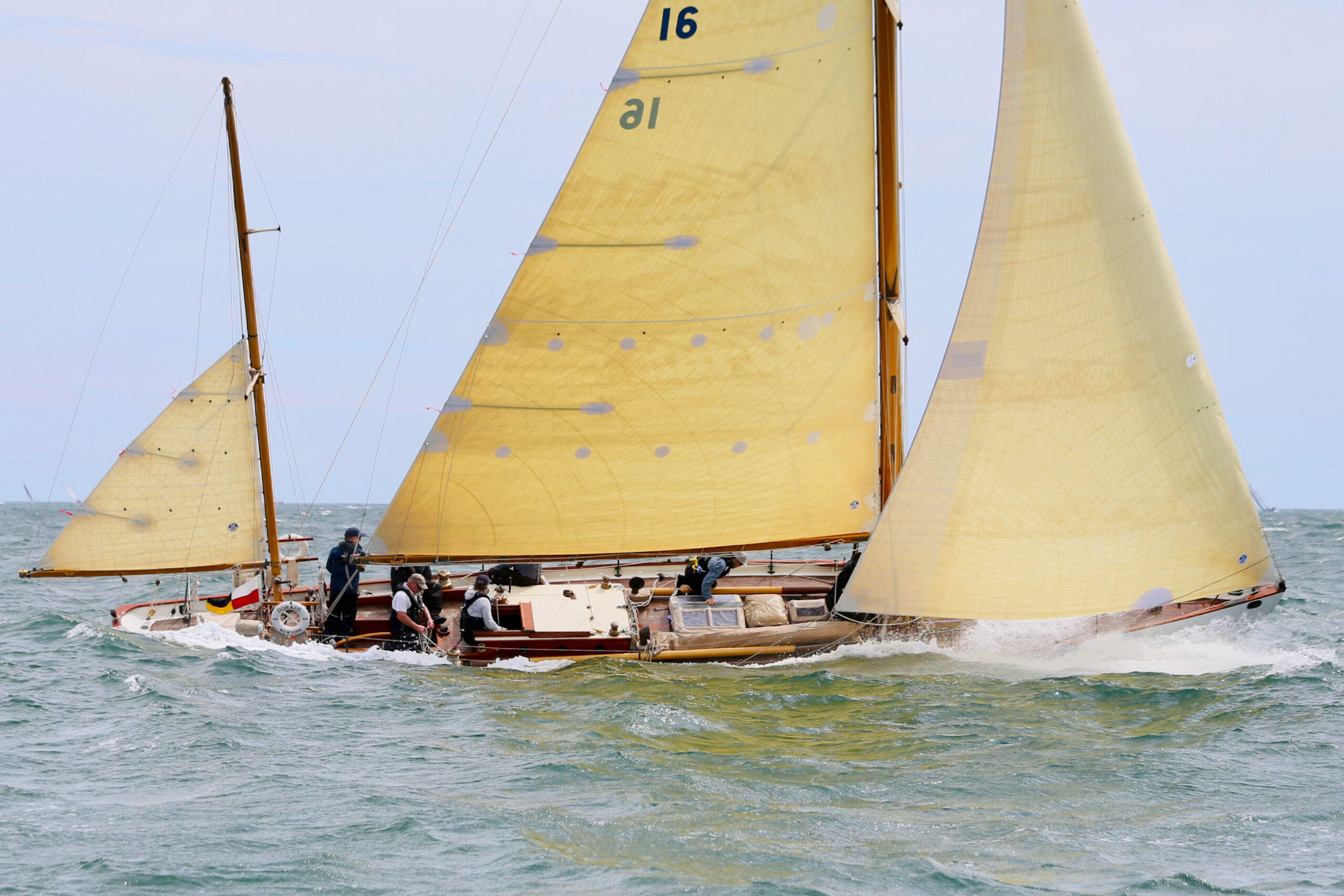
After rounding R2, we put in a reef and added our Genoa staysail and small mizzen staysail - this is good combo for us as it's a good amount of sail area yet a low center of effort. We made good gains on the fleet while making good miles towards the finish.
Later that evening the wind went aft and built which becomes challenging for us as the notorious "Dorade Roll" starts to come into play. This is not fun and definitely dangerous. We did our best to settle the boat down and keep good VMG (velocity made good) towards the finish. This typically involves preventers, a bungee style boom vang, and strong biceps from the helm.
We settled into a decent mode, however, at about 2am when the breeze had gone aft enough to consider setting the spinnaker. This was a bit challenging as our normal bow guy (Chewy) could not join us for the race, which meant I was on the bow (never a good thing...) trying to sort out the mess of white lines while the guys in the back did their best to wrestle the boat onto course. Eventually we were able to hoist, but I had somehow crossed the spinnaker halyard behind the spreader, which meant we had to drop, pack, and get cleaned up for another hoist. By the time we were ready to hoist, the wind was touching 30 and continuing to go aft ,which meant we changed to a poled-out jib instead the spinnaker—a much easier setup as well as better VMG in winds over 26.
It was now daylight on the 2nd day, and we had a done a pretty good job of minimizing distance sailed while still hitting our target angles. The wind had started going forward and dropping a bit— by the end of day we were back onto our J4 and staysail combination. This held through most of the second night, but then about 3am it had gotten light enough to change up to our R1 (LRH headsail), and we used this until early on the afternoon of the 3rd day when it was time to change up to our largest upwind headsail (J0).
For the next 36 hours we would switch between the J0 and the drifter as we tried to maximize our performance while always keeping as close to rhumb line as possible to minimize distance sailed.
Our biggest move of the race came late on the 3rd day when we decided to leverage ourselves to the west of the fleet. We spent some time sailing 90 degrees to the course to make this happen, but it paid off later as the righthand wind shift came in. Given our position, we were able to ease sheets for the final 60 miles whereas the boats to the left of us had to sail fully upwind to the finish. After doing three Bermuda Races on Dorade, I was determined to be in the right-most group on the final approach because we just can't go upwind as well as the other boats.
We had some challenging conditions in the final 15 miles with a couple squalls rolling through the fleet. We tacked on the shifts, and the guys did a great job of hanging onto the big J0 in up to 18 TWS (normal max is 12). I wanted to change to a smaller sail as I was concerned about breaking the J0, but I was equally concerned about the time lost in performing a change. I knew the times were close so we elected to just hang on—it was the right thing to do as in the end we were 1st in our class by 1 minute 24 seconds. If we had made the change we would have been 2nd.
Having done quite a few Bermuda Races now (3 on Dorade), I've learned a few things that we implemented for this race:
- Minimize miles sailed—don't spear off looking for better current or wind unless you're 100% certain. Boats like Dorade reward sailing fewer miles.
- Pick your spot to cross the Stream and don't panic when you're in bad current—even a good spot will still have times of adverse current.
- The wind near Bermuda almost always results in a starboard tack beat for the last 100 miles. Set up to the right of your competition on the final approach (within reason).
This approach worked well for us this time, plus Matt always allows us to have the tools to maximize our opportunities - we're very grateful for this.
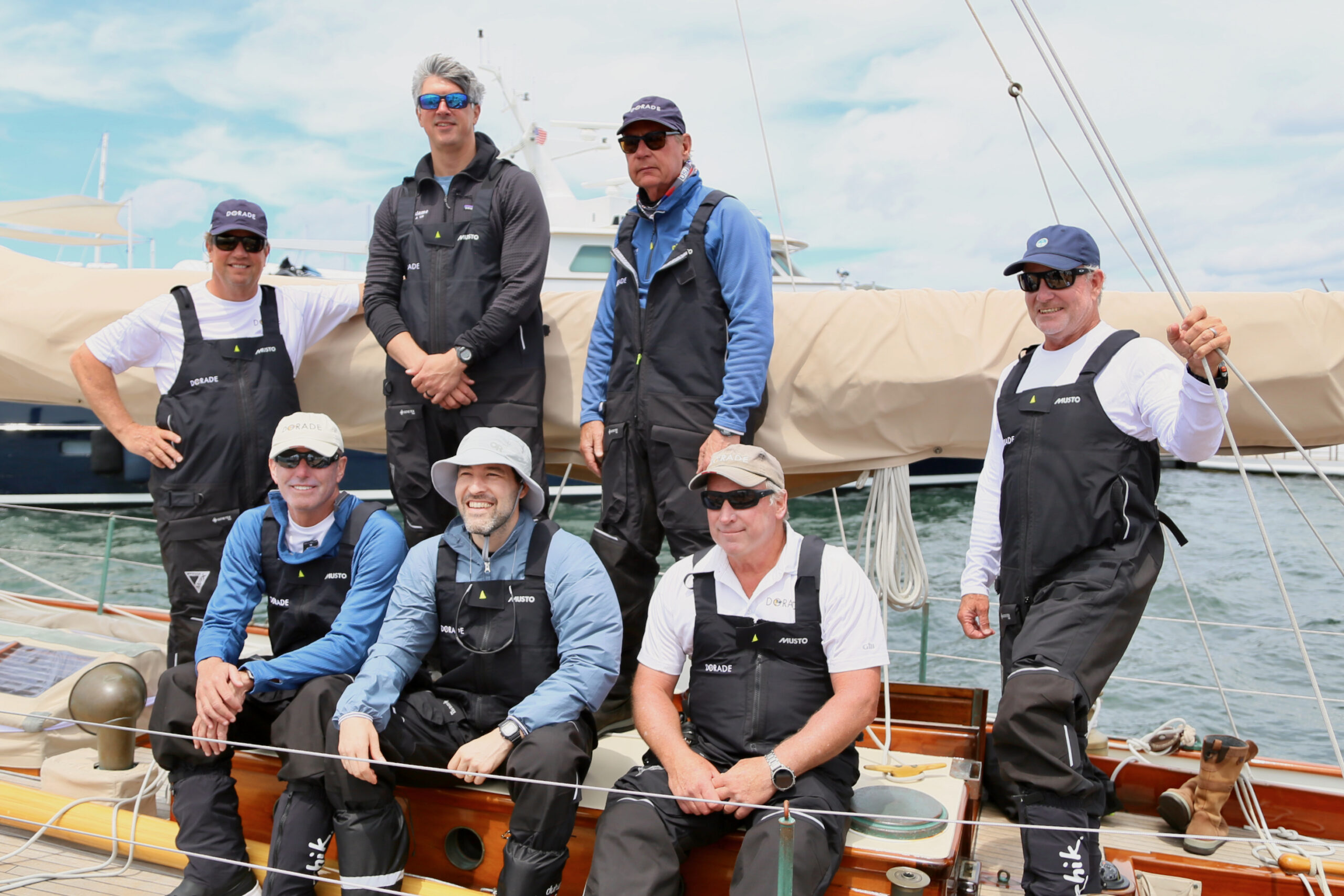
We had an amazing team of sailors on board and Bill got up to speed quickly—he proved to be tough as nails like his dad!
—Kevin Miller
First-Time Offshore Reflections
Expectations vs. Reality
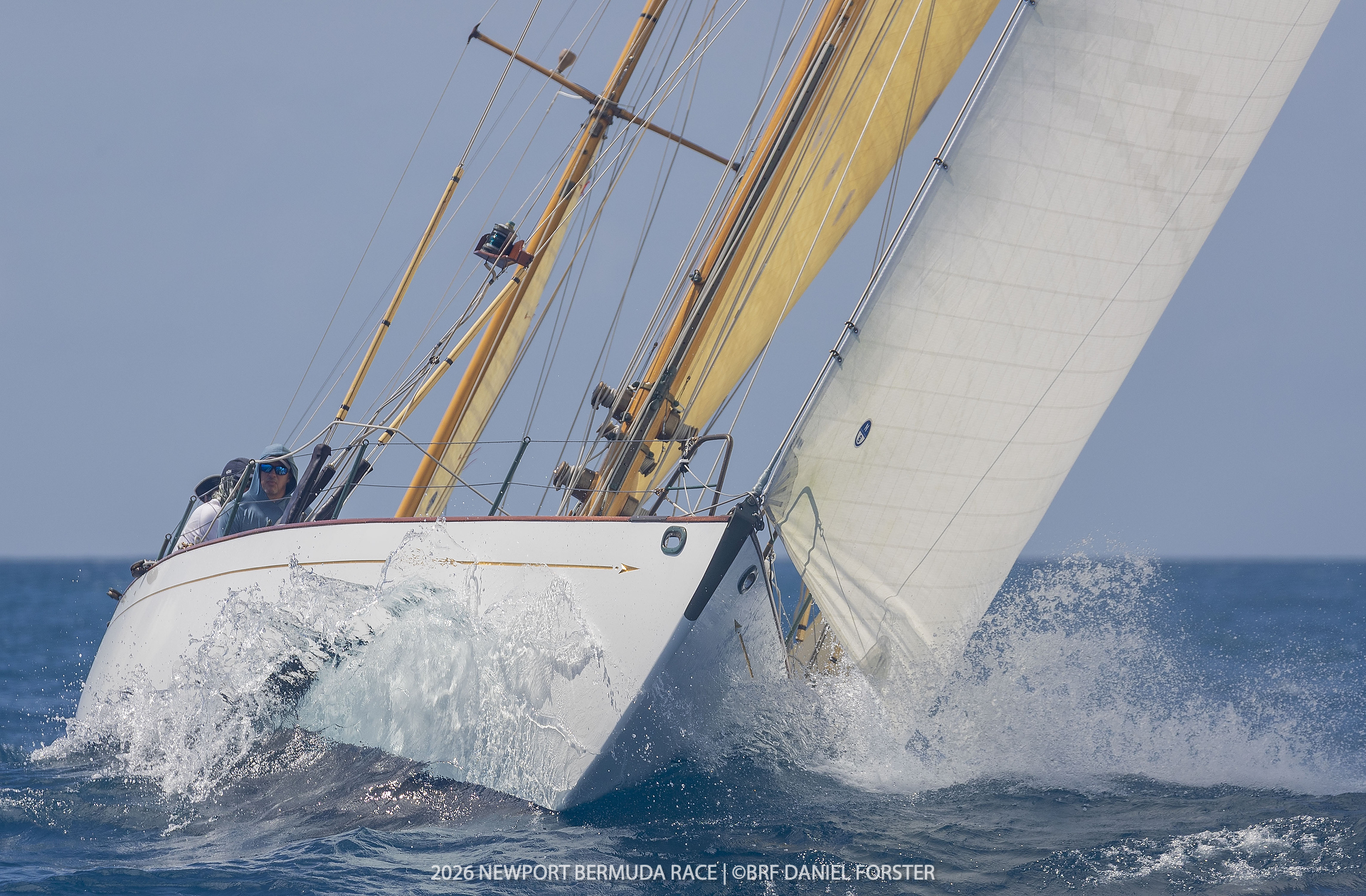
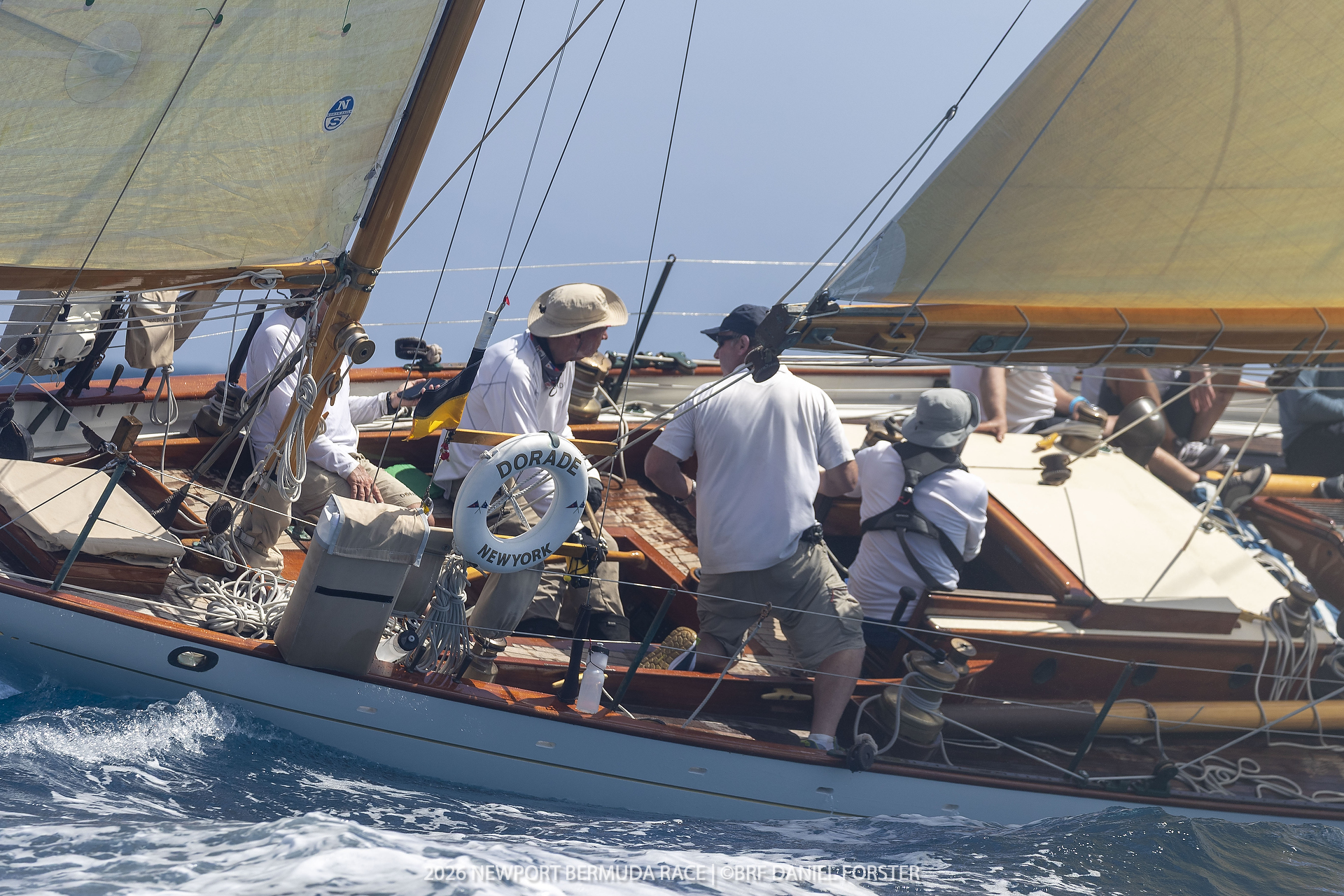
Before the 2026 race to Bermuda, my sailing experience was limited to a few inshore days a year with my dad, so I truly had no idea what to expect from the open ocean. The Atlantic didn't offer a gentle introduction. Instead, it threw me straight into the deep end with aggressive, hard-charging conditions. Suddenly, I was wrestling a narrow, 97-year-old wooden boat through a chaotic, bruising sea state. It was physically punishing and wildly intense, but completely exhilarating.
2026 Newport Bermuda Race
Racing Dorade Offshore for the First Time
Despite my limited time on boats, I could feel how special Dorade is and how she is meant to be an offshore racer. The sound of the ocean moving past her wooden hull and the way she handled heavy water felt deeply alive. It was a rhythmic, historic experience that connected me to every sailor who has ever stood on her decks in the open ocean over the last nearly 100 years.
My Biggest Learning Experience
The learning curve was more of a vertical cliff than a curve due to my lack of offshore experience. My fellow sailors during the race had explained that unlike a modern boat, on Dorade, you can’t just press a button or pull a line to fix a mistake; you are dealing with a living piece of history that demands absolute foresight. They explained that every sail change or reef is a traditional, coordinated ballet that must be set in motion 20 minutes before the weather actually hits. Balancing my inexperience with my desire to contribute fully was an intense lesson in humility. It forced me to trust my fellow sailors’ expertise completely and taught me what true, proactive seamanship really means.
Favorite Parts of the Race
It is hard to pick a favorite part. I enjoyed the first two days of chaotic sea state because it felt like a real full-on adventure and exciting to be on a boat navigating this complex terrain. In the second half of the race, the sea state was calmer, and it felt very peaceful to sail by the moonlight and under the stars through an open ocean without another boat in sight.
—Bill Brooks